

From Early Copper Town to Top-Secret Army Base to Snowbird RV Hotspot, Bouse is Still Standing
- Larry Nader, Larry Nader Photography & Art

- Aug 23, 2022
- 4 min read
By Larry Nader, Larry Nader Photography & Art
Published August 23, 2022, for State 48 A2Z
The area known as Bouse, Arizona, a census-designated place (CDP) in La Paz County, Arizona, has experienced several incarnations since it was first settled by Thomas Bouse in the late 1800s. Thomas Bouse arrived in the area from his home state of Missouri in 1889 looking for gold. He would go on to file claims for several mines in the area and homesteaded several acres of land. The area of Bouse would go on to also see it become home to a top-secret army base during World War II and even an RV winter travel hotspot in the 1960s.


Officially settled in 1906, Bouse was first known as Brayton, named after the owner of the Brayton Commercial Company of Wickenburg and Salome. The name change to Bouse is somewhat less transparent with one story saying the name was changed to honor Thomas Bouse who first settled the land. Another story is that when the application was made for the name, it was Bouse who applied and put his name on the documents. Or it may just be a combination of the two stories but, no matter which is true, the area today is home to just under 1,200 residents as of the 2020 US Census.

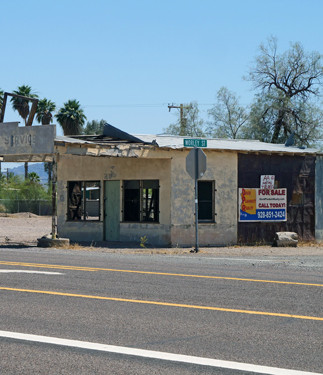


In the early days, Thomas Bouse was looking to make some fast cash and decided to sell his well and some of his mining claims, along with providing the railroad with the right of way through the area. In 1906, the Arizona and California Railroad, which was a part of the Santa Fe Railway, started laying down tracks from Wickenburg, Arizona to California passing through what is present-day Salome, Hope, and Bouse.
It was at this time that Brayton established the Brayton Mercantile Company just to the east of the train depot in Bouse. As a result, the developing desert community was first known as Brayton. As the railroad came through the area, so did several businessmen and, with that, permanent structures were built for the start of a town. The Brayton Post Office opened its doors on May 19, 1906.


At the time Brayton was in Yuma County and had yet to file an application for its name. When the application form was sent to register the town, the application had the name Brayton listed. When the form was returned, the name Brayton was crossed out and the name Bouse was written in red ink. On January 22, 1907, the post office officially changed its name to Bouse, and the rest is history.


By the late 1910s, Bouse had numerous wood frame and concrete block buildings including hotels, gas stations, saloons, the post office, a schoolhouse, an auto repair shop, and mercantile shops. But by 1930, both the Swansea and Old Planet mines (Old Planet was Arizona’s first rich copper mine) had closed and, according to the Bouse Chamber of Commerce webpage, Bouse became “a sleepy village of miners, mixed with a few agriculture and cattle farms.”
Over the next decade or so, Bouse would continue to feel the effects of the mine closings and by 1943 most of the businesses had shut down while many of the remaining buildings were in serious disrepair. It was around this time that World War II US Army General George S. Patton would establish a top-secret base in Bouse to train troops for warfare. In fact, the camp was so secret it was not listed among the other desert training facilities that were used during World War II. What made it top-secret is that they were training troops on a new weapons program called Project Canal Defense Light (CDL). The project was so secret that leaking any information at all about it or the camp would bring imprisonment or even execution as outlined in the Espionage Act of 1917.


The CDL, a British-designed weapon nicknamed Gizmo, used a carbon arc lamp mounted on the M3A1 tanks. The weapon was aimed at the enemy through a two-inch slot in the specially fitted tank turret and basically rendered them temporarily disorientated by blinding them with the high-powered light. The training was completed by early 1944 and in April of that year Camp Bouse was closed and its troops sent to Fort Knox, Kentucky before eventually being sent to England for additional training. The town celebrates an annual event called Camp Bouse Days, in which some of the men who trained at the camp return. Those numbers must be near zero by now.




Bouse saw some resurgence in the 1960s as automobile and RV travel started picking up. Still today, Bouse sees its share of visitors who either spend some time there with their RVs in the winter months or those traveling through town with their watercraft heading to the Colorado River.


While Bouse is home to 1,175 people, it is very easy to miss when you are traveling on state route 72. However, right off SR72 are a couple of historic monuments set up for travelers and visitors to learn about the town’s history. One is a collection of ruins and equipment from Camp Bouse with the other being collection of buildings and other old town artifacts. Another cool area to check out when driving through will require a very minor detour (relatively well marked) to the original 1892 homestead of Thomas Bouse.

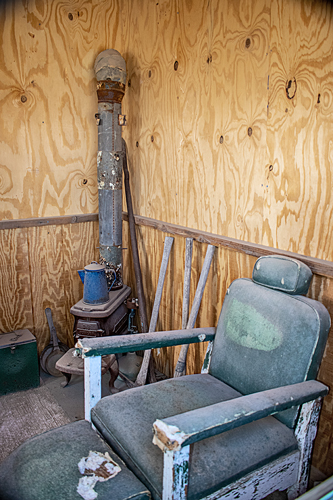

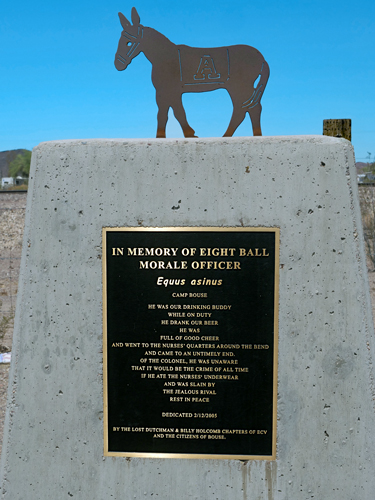
Bouse is not a destination spot for most travelers in Arizona, but it is a great diversion spot to take a break from the road and soak in some of the lesser-known histories of the Arizona Territory days. Next time you are driving by, stop in a few moments and relive the history for yourself.
That’ll wrap things up for this week. As always, thanks for reading, stay safe, and happy travels. Be sure to like and follow us on social media (links below), share our blog posts, and feel free to give us your feedback. We’d love to hear from you. Peace!
All content is © 2022, Larry Nader & Larry Nader Photography & Art
State 48 A2Z Social Media Links


Larry Nader Photography & Art Social Media Links


Our Online Art Stores
Shop these sites to select our photography and digital art printed on your choice of wall art mediums, or on clothing, household items, office items, and more.



Comments